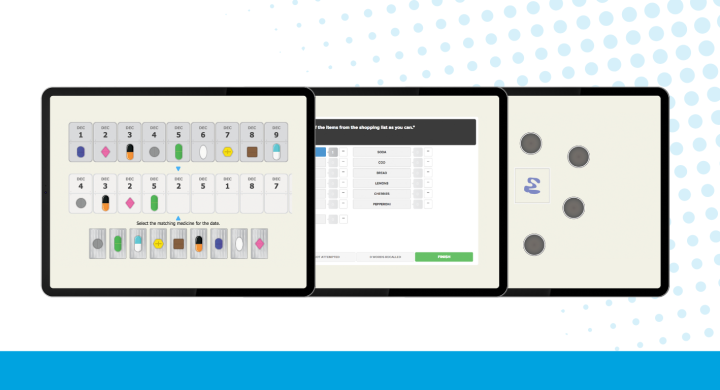
Studies of investigational drugs targeting the dementia stage of Alzheimer’s disease (AD) have used a co-primary approach to assess cognitive and functional (or global) measures. This approach ensured both a clinically meaningful effect by a demonstration of benefit on the functional measure and that the observed functional benefit was accompanied by an effect on the core symptoms of the disease as measured by the cognitive assessment. This webinar will examine how endpoint strategy, rater training and eCOA delivery can support data quality in Alzheimer’s Trials as studies move into earlier disease stages.
As the scientific understanding of AD has evolved, enrollment of patients with AD at earlier stages, where there may be no functional impairment or even no detectable clinical abnormality, has become possible and desirable to delay or halt the disease at the earliest opportunity.
Because disease manifestations are highly variable in early-stage AD, clinical trials in this population require different clinical assessments and/or novel endpoints to effectively capture and demonstrate treatment benefit. In addition, the complexity of measurement methods required in early-AD requires strategic approaches to rater training and data integrity across global, decentralized study environments. Early missteps, whether in assessment selection, rater selection or operational execution, can compromise data quality and lead to loss of signal.
This webinar will examine the science-first foundations of early-stage AD protocol design, including considerations around which cognitive endpoints can be utilized, operationalized and protected in the absence of overt cognitive impairment. The discussion will connect this scientific strategy to study execution, highlighting how expert rater training and monitoring, combined with flexible eCOA delivery, are critical to preserving endpoint data quality.
WHAT YOU WILL LEARN:
Attendees will gain practical insight into how scientific strategy and operational execution must align to preserve data quality and endpoint integrity across global early-stage Alzheimer’s trials, including:
- How to select and apply the right cognitive and functional endpoints for populations where overt impairment may be absent
- Best practices for rater selection, training, monitoring and remediation to ensure reliability and consistency throughout the study
- How flexible eCOA delivery with BYOD and provisioned device support enables complex cognitive and patient-reported assessments while maintaining real-time data visibility and regulatory readiness
- Advanced approaches to digital assessments and analytics, including cognitive batteries and voice analytics, and their role in capturing treatment benefit in early-stage populations
Featuring Cogstate Speaker
Ed I. Bartolic, PhD
Senior Director, Clinical Science
Edward I. Bartolic, PhD, is a Senior Science Director at Cogstate and a Clinical Neuropsychologist with 20 years of postdoctoral clinical research experience.
Dr. Bartolic has held various scientific positions within global contract research organizations and has served as a Clinical/Therapeutic Lead, overseeing the development and management of Global Rater Training and Data Monitoring/Rater Surveillance programs for studies in Psychiatry and Neurology. He has served as a Lead Rater Trainer at numerous investigator meetings for studies across CNS indications. He has designed customized methodologies for remote monitoring of clinical trial assessments.
Dr. Bartolic graduated from the University of Cincinnati with a PhD in Clinical Psychology and specialization in Neuropsychology.